Various Old Norse sagas, such as the Orkneyinga saga and the Bósa saga ok Herrauðs, describe a mysterious garment: the kufl. In these sagas, the garment served as a disguise – for example, to conceal chainmail – and was associated with both the servile class and with working freemen. For instance, Króka-Refs saga describes how the protagonist Ref disguises himself as an old merchant by donning a black-blue kufl (Smiley 2005, 618–619), and in Bósa saga ok Herrauðr how the protagonist Herraud put on his slave’s kufl to disguise himself:
Herrauðr fór í kufl þrælsins ok leiddi eftir sér kvígubelginn, en Bósi steypti kápu sinni yfir þrælinn ok bar hann á baki sér, þangat til at þeir sá hofit.
Herraud put on the cloak [kufl] of the slave and led after him the heifer skin, and Bosi threw his cape over the slave and carried him on his back, until they saw the temple (Bósa Saga ok Herrauðs, ch. 8. Trans. George L. Hardman).
In the Orkneyinga saga, the garment is further associated with seafaring when Jarl Thorfinn disguises himself in an undyed kufl on board a ship (Palsson 2004, 71–72) and Jarl Rognvald disguises himself with the garment as an old fisherman (Palsson 2004, 185–190). Descriptions suggest that the kufl was primarily a practical garment: it had a hood, was long enough to be worn with a belt, yet short enough to be tucked into trousers. The garment was likely a continuation or derivative of the Late Roman cuculla (Ewing 2016, 113). Interestingly, the word lives on in modern Icelandic, where kufl refers to a monk’s cowl, and is thus related to the English ‘cowl’ itself.
Replica
A standard cuculla – shaped like a long hood – is, however, too short to conceal chainmail or more elaborate garments, or to be worn with a belt. The paenula – a long semicircular cloak with a hood worn by the Romans – or a long variant of a cuculla, does meet the requirements of the description of a kufl. It is possible that the kufl was based on this garment.
One of our group members, Alexander, however, also proposed a different model of kufl: one the length of a tunic with open sides and no sleeves. With this design, the arms are free to carry out tasks, it can be worn with a belt, and its length still offers protection against the weather. This also takes into account conditions at sea, ensuring the garment does not restrict freedom of movement on board a ship, for example when strong winds arise. The only drawback, however, is the aspect of disguise: the open sides reveal a more elaborate garment or chainmail. Alexander’s replica, bearing in mind the working, unfree class, is made of loosely woven, undyed woollen fabric. Due to the sparse description, it is unclear what the kufl actually looked like, and therefore also whether the garment was worn – or even known – in Frisia. Nevertheless, it was an inspiring thought experiment!
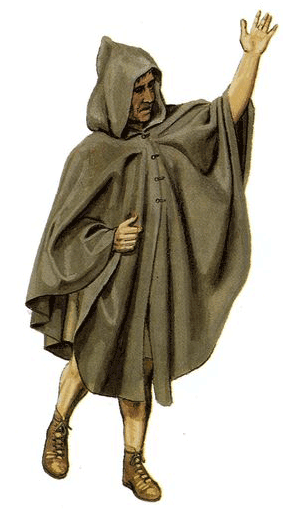
Picture of a paenula
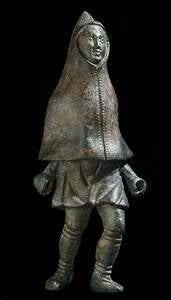
A bronze statuette from the 3rd century AD depicting a man wearing a cuculla. Landesmuseum Trier.
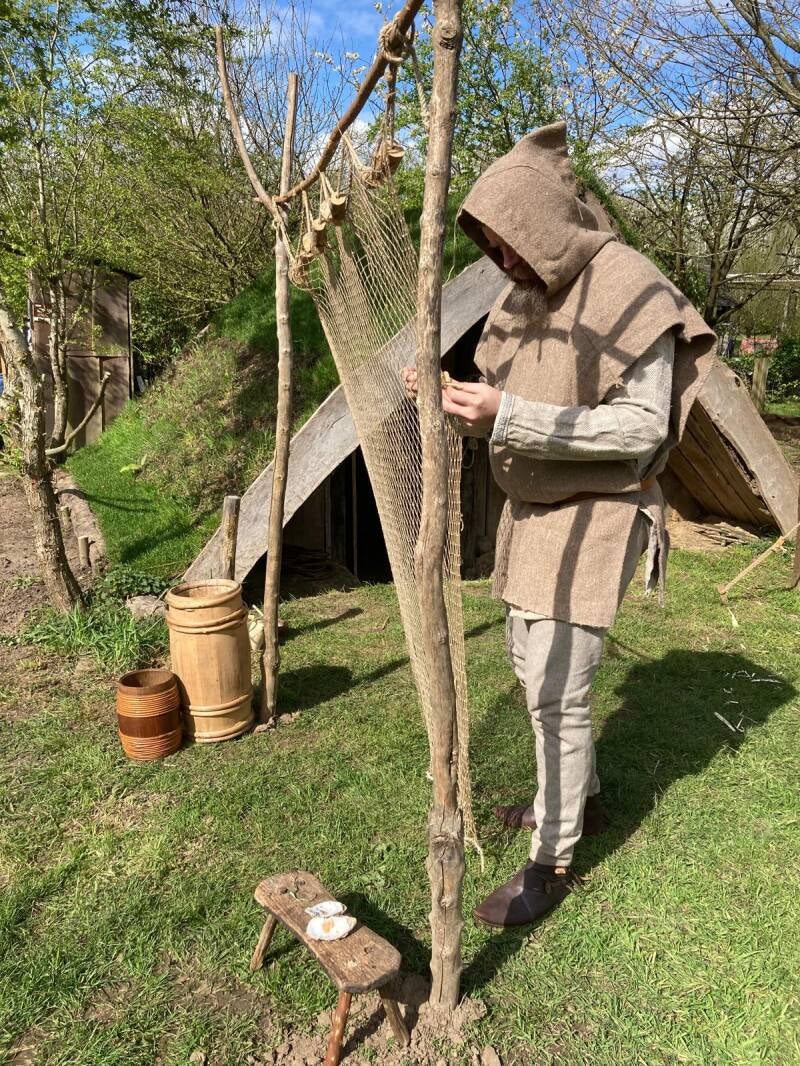
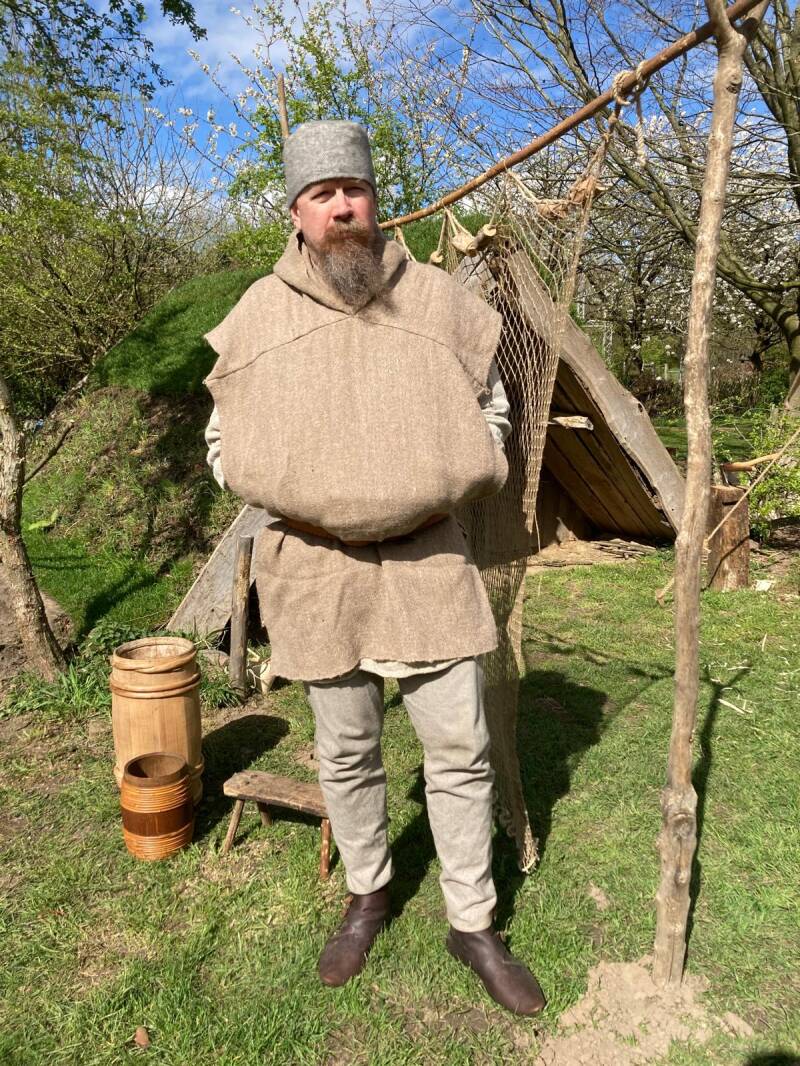
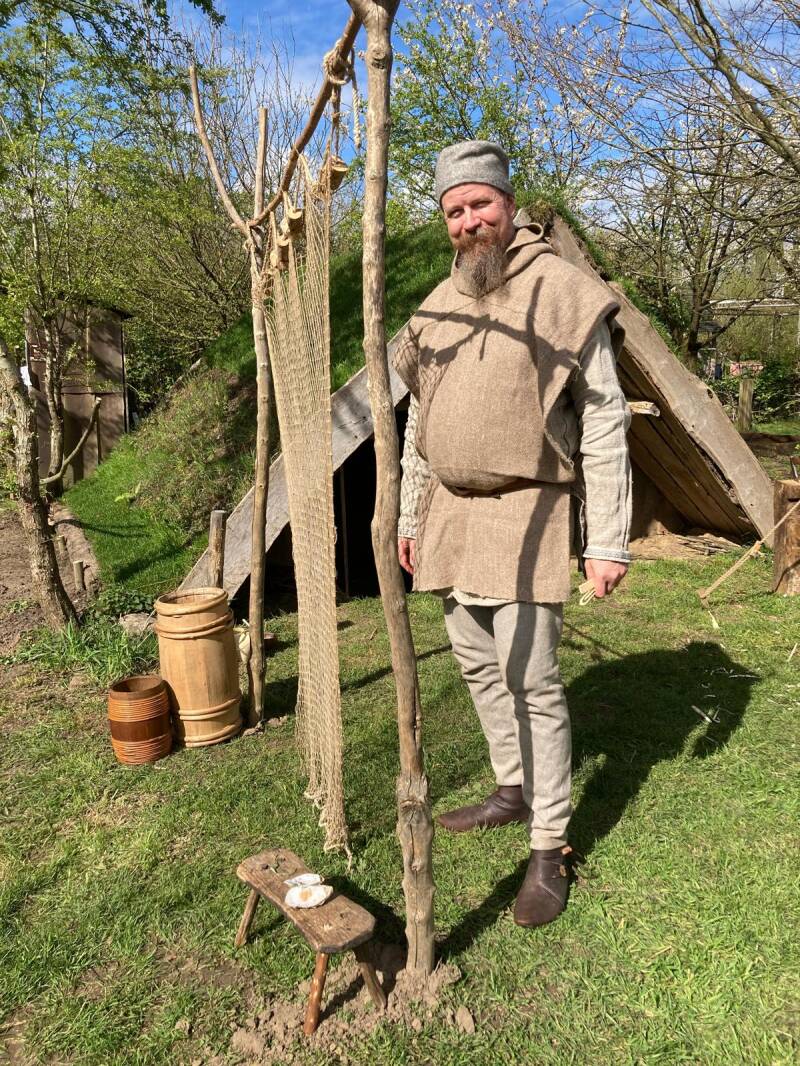
Alexander's reconstruction!
Reactie plaatsen
Reacties